
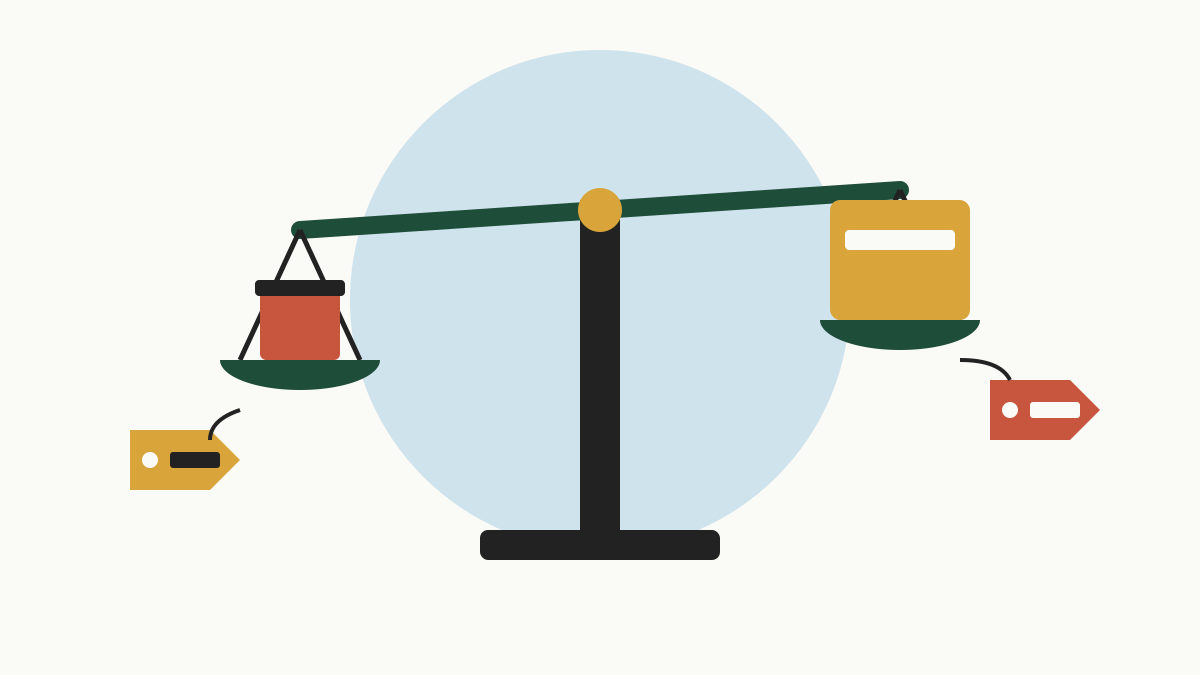
A unit price tells you what you pay for one standard measure of a product, such as one ounce, one sheet, or one load. To compare two items, divide each price by its quantity in the same unit, and the lower result is the cheaper choice per unit. That single step cuts through package sizes, promotional labels, and confusing shelf displays.
Why the Sticker Price Can Mislead
Packages come in so many sizes that the total price rarely tells the full story. A box that costs less at the register may simply hold less. Manufacturers also adjust sizes over time, so a familiar container might quietly contain a little less than it used to while the price stays the same. Looking only at the total makes it easy to miss these shifts.
Many stores print a unit price on the shelf tag, often in small type near the main price. It is a helpful starting point, but tags are not always consistent. One item might be priced per ounce while the item next to it is priced per pound or per count. Knowing how to run the numbers yourself means you are never stuck relying on a label that compares apples to oranges.
The Basic Calculation
The formula is simple: unit price = total price ÷ quantity. The key is making sure both items use the same unit before you compare. If one bottle is measured in fluid ounces and another in liters, convert one of them first. A phone calculator handles the arithmetic in seconds.
- Find the total price of each item.
- Find the quantity printed on each package.
- Convert quantities to the same unit if needed.
- Divide price by quantity for each item.
- Compare the results side by side.
A Worked Example
Illustration with round, hypothetical numbers: Suppose a small jar of peanut butter holds 16 ounces and costs $4.00, while a large jar holds 40 ounces and costs $8.00.
| Item | Price | Size | Unit price |
|---|---|---|---|
| Small jar | $4.00 | 16 oz | $0.25 per oz |
| Large jar | $8.00 | 40 oz | $0.20 per oz |
The large jar costs twice as much at the register but delivers two and a half times the product, so each ounce is five cents cheaper. Now imagine a sale drops the small jar to $3.00. Its unit price becomes $3.00 ÷ 16, or about $0.19 per ounce, which edges out the large jar. A discount on the smaller size can flip the answer, which is exactly why checking the math matters.
When the Cheapest Unit Price Is Not the Best Buy
A lower unit price only saves money if you actually use what you buy. A giant bag of produce that spoils halfway through the week can end up costing more per usable portion than a smaller bag you finish. The same goes for items that expire, take up scarce storage space, or that you are only trying for the first time.
Quality and concentration also matter. A concentrated cleaner might cost more per ounce yet require less per use, so cost per use can be a fairer measure than cost per ounce. For items like paper towels or trash bags, comparing by sheet count or number of bags often works better than comparing by package.
Other factors worth weighing
- How quickly your household goes through the product.
- Whether you have room to store a bulk size.
- Any membership or delivery costs tied to buying in bulk.
Common Mistakes
- Mixing units: comparing a price per ounce with a price per pound without converting.
- Assuming bigger is cheaper: larger sizes often are, but sales and coupons on smaller sizes can change that.
- Ignoring waste: the unit price only counts the portion you actually use.
- Trusting every shelf tag: tags can be outdated or use inconsistent units.
Unit pricing is one of the easiest money habits to build because it needs nothing more than a quick division. Run the numbers on the items you buy most often, factor in how much you will really use, and the better value usually becomes clear within a minute of standing in the aisle.